
What Are Nursery Covers?
If you have ever walked through a plant nursery, a greenhouse, or even a small home garden setup, you have probably seen rows of young plants growing in black plastic bags. Those are nursery polythene bags, and although they may look simple, they play a very important role in helping plants grow strong before they are moved to their final place in the garden, farm, or landscape.
Nursery covers are specially made plastic bags used for raising seedlings, saplings, and young plants. They are usually made from HDPE or LDPE, two types of polyethylene that are known for being strong, flexible, and resistant to moisture. In simple terms, these bags give young plants a safe and practical place to grow while their roots develop properly. Instead of planting directly into the ground too early, growers use these bags to protect the plant during its most delicate stage.
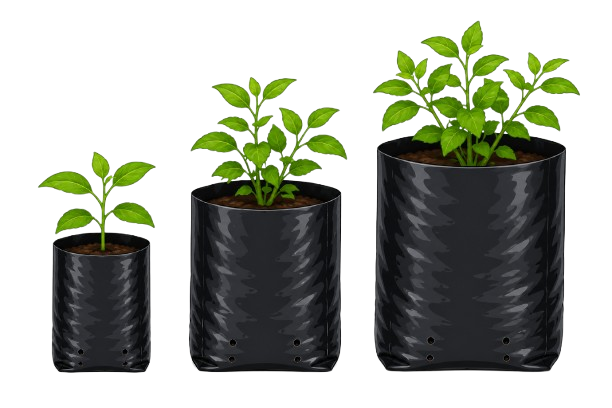
What makes nursery covers so useful is how easy they are to work with. They are lightweight, affordable, and available in many sizes, which means they can be used for everything from tiny vegetable seedlings to larger fruit tree saplings. A home gardener may use them for a few herbs or flowers, while a commercial nursery may use thousands of them at once. That flexibility is one of the main reasons nursery covers have become such a common sight in agriculture and horticulture.
Most nursery covers are black, and there is a good reason for that. The dark color helps block sunlight from reaching the roots, which protects them from heat and reduces algae growth in the soil. Black bags also help maintain a more stable soil temperature and retain moisture better than transparent bags. For outdoor nurseries, UV-stabilized bags are often preferred because they last longer under direct sunlight and do not crack as quickly. Some bags are perforated with drainage holes, which is another important feature because excess water needs to escape. Without proper drainage, roots can sit in water, leading to rot and poor plant health.
The size of the bag matters just as much as the material. Small bags are ideal for vegetable seedlings, herbs, and flowers, while larger bags are better for shrubs, fruit plants, and tree saplings. Choosing the right size helps the roots spread naturally without becoming cramped. If the bag is too small, the plant may become root-bound and stop growing properly. If it is too large, the soil may hold too much moisture and slow down development. That is why growers usually match the bag size to the type of plant they are raising.
Using nursery covers is also very straightforward. First, the right size bag is selected based on the plant. Then it is filled with a good growing medium, usually a mix of soil, compost, cocopeat, and sometimes sand for better drainage. After that, seeds or seedlings are planted, watered gently, and placed in a suitable location with enough sunlight. From there, the plant is cared for until it reaches the right size for transplanting. When the time comes, the bag can be cut or removed carefully so the roots stay intact. This simple process makes nursery covers a practical choice for both beginners and experienced growers.
These bags are used for a wide range of plants. Vegetable growers often use them for tomatoes, chillies, brinjal, cabbage, cauliflower, and okra. Fruit plant growers use them for mango, guava, lemon, papaya, and pomegranate. Flower growers rely on them for roses, marigolds, hibiscus, and jasmine. They are also useful for tree saplings such as neem, teak, eucalyptus, and bamboo, as well as herbs like mint, coriander, basil, and curry leaves. In other words, nursery covers are not limited to one kind of plant; they are useful across almost every type of cultivation.
One of the biggest advantages of nursery covers is cost. Compared to clay pots or rigid plastic containers, they are much more affordable, especially when large numbers are needed. They are also easy to stack, store, and transport, which saves space and makes nursery management simpler. Because they are lightweight, workers can move them around without much effort. For commercial growers, this can make a huge difference in daily operations. For home gardeners, it means less mess and more convenience.
Nursery covers also support healthier root growth. Since the bag is flexible, roots can spread naturally instead of being forced into a hard container. This helps the plant develop a stronger root system, which in turn supports better growth above the soil. Healthy roots are the foundation of a healthy plant, so this is one of the main reasons growers trust nursery covers. They also make transplantation easier because the plant can be moved with minimal disturbance. That means less stress for the plant and a better chance of survival after planting.
Of course, like any gardening tool, nursery covers work best when used correctly. A common mistake beginners make is choosing the wrong size. Another is overwatering, which can quickly damage the roots even if the bag has drainage holes. Poor soil mix is another issue, since young plants need a light, well-draining medium rather than heavy garden soil alone. It is also important not to block the drainage holes and not to leave plants in the bags for too long, because they can become root-bound if transplantation is delayed. A little care goes a long way in getting the best results.
Many people also ask whether nursery polythene bags can be reused. The answer is yes, as long as they are still in good condition. If the bag has not torn and the drainage holes are still open, it can often be cleaned and used again. Before reusing it, the old soil should be removed, the bag washed properly, and disinfected if it was previously used for a diseased plant. Storing the bags in a dry, clean place helps extend their life and reduces waste. This makes them even more practical and economical.
When choosing nursery bags, it is worth paying attention to the thickness of the plastic, the quality of the material, the size, and whether the bag has proper drainage holes. If the bags will be used outdoors, UV resistance is important. A reliable supplier also matters because better-quality bags usually last longer and perform better. In the long run, investing in good nursery polythene bags can save money by reducing plant loss and improving transplant success.
So, what are nursery polythene bags really for? They are a simple but highly effective way to raise healthy young plants before moving them to their final growing place. They protect roots, save space, reduce costs, and make plant care easier for both small gardeners and large commercial nurseries. Whether you are growing vegetables, flowers, fruit trees, herbs, or forest saplings, nursery bags give your plants a strong start. And in gardening, that strong start often makes all the difference.
If you are just beginning your gardening journey, nursery polythene bags are one of the easiest and most useful tools you can start with. They are affordable, practical, and dependable, which is exactly why they remain such an important part of modern plant growing.